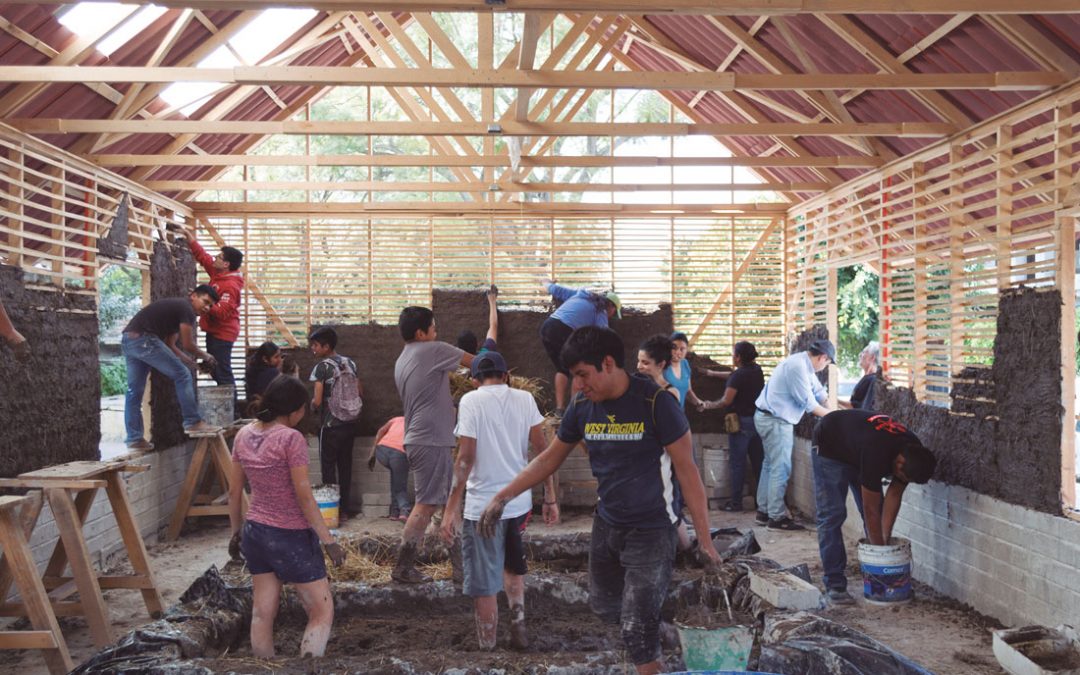
Description: This article by Ayuujk intelectual Floriberto Díaz reflects on the Ayuujk worldview in relation to the Earth, nature and community. It emphasises that, for indigenous peoples, the Earth is a mother figure and the source of all life. This non-anthropocentric approach rejects the privatisation of nature and promotes communality as a fundamental principle of life and social interaction. The article describes tequio, a community practice involving collective, unpaid, compulsory work, which strengthens the bonds between people and their relationship with the land. The article also criticises the ways in which colonial and contemporary dynamics have attempted to undermine these indigenous practices.
Teaching ideas: The article introduces two concepts, comunalidad and tequio, that don’t translate straightforwardly into English or mainstream Spanish political vocabulary. A good opening activity asks students to work in pairs to define each term in their own words after reading, then compare their definitions with those of other pairs, negotiating a shared understanding, which can develop skills for close reading and paraphrase. The contrast between tequio and trabajo is particularly generative: students can map the differences—collective vs. individual, obligatory vs. voluntary, relational vs. transactional—and discuss what these distinctions reveal about different conceptions of community, value, and the relationship with land, practicing comparative structures and vocabulary. A writing exercise can then ask students to reflect on whether any practice in their own communities resembles tequio—and if not, what that absence might suggest—using the subjunctive to express doubt, possibility, and opinion. Given that Floriberto Díaz and Yásnaya Aguilar are both Ayuujk intellectuals from Oaxaca, this text pairs naturally with Ää: manifiestos sobre la diversidad lingüística as a broader conversation about indigenous knowledge, political resistance, and the relationship between land and language.