
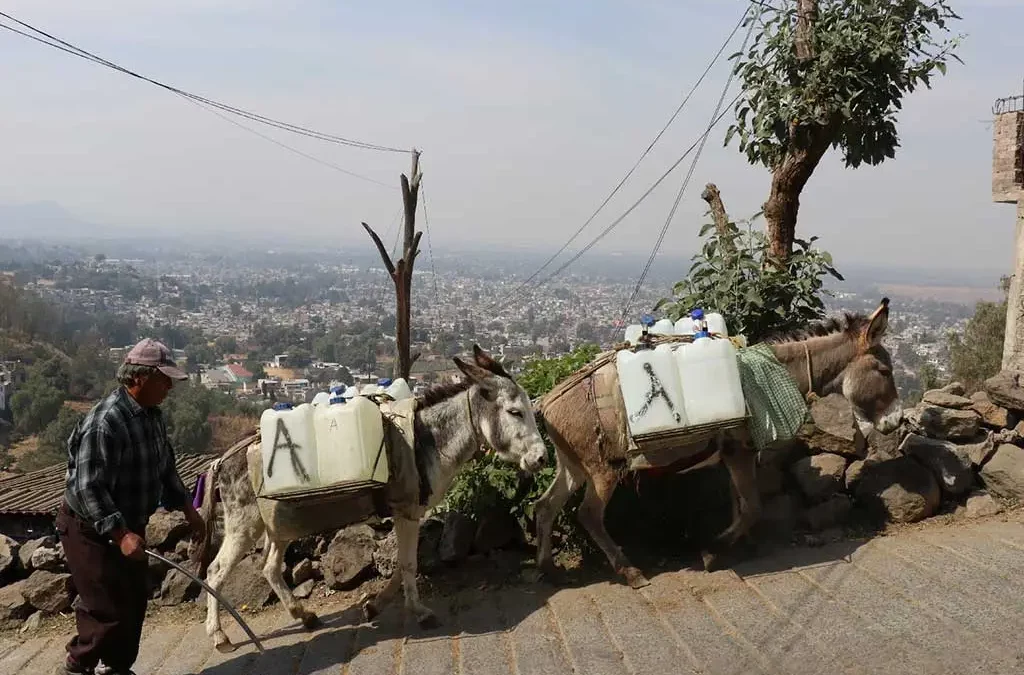
Description: Isla Urbana is a project that promotes the harvesting and use of rainwater in Mexico, particularly in communities with limited access to clean drinking water. By installing rainwater harvesting systems, the initiative aims to mitigate the water crisis, promote sustainability and enhance people’s quality of life. The website provides information on the technology used, the project’s social and environmental impacts, and ways to support the cause.
Teaching ideas: Students can begin by navigating the Isla Urbana website and answering guided comprehension questions about the project’s objectives, the technology it uses, and the communities it serves, practicing reading strategies and vocabulary related to water access, sustainability, and urban infrastructure. This material pairs well with others in the unit—such as the qochas or the water sowing technique in Colombia—and students can compare these different approaches to water harvesting across Latin American contexts, discussing similarities and differences using contrastive connectors and vocabulary for evaluating impact. The social justice dimension of the project—the fact that it targets communities with limited access to clean drinking water—can open a discussion about unequal distribution of water resources in urban settings, giving students the opportunity to practice expressing causes, consequences, and moral arguments. Finally, students can write a short proposal to implement a rainwater harvesting system in their own neighborhood or a community they know, using the subjunctive to make recommendations and the conditional to describe projected benefits.