
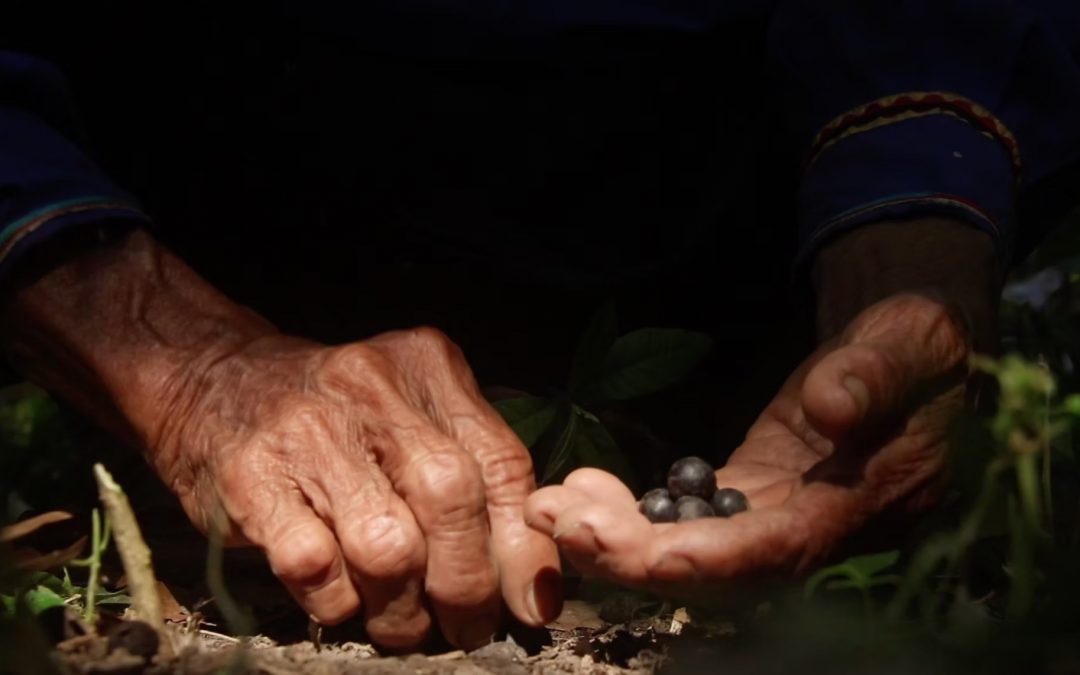
Description: JA CHOMOBICHO BANENI (La última tinaja) is an 8-minute documentary short co-directed by Gabriela Delgado Maldonado and Bernabé Mahua Fasanando, the first indigenous filmmaker to win the best documentary award from Peru’s Ministry of Culture. It was filmed in the Shipibo-Konibo language with Spanish subtitles in the community of Santa Teresita de Cashibococha, near Pucallpa, Peru. The film follows Lola, an elderly Shipibo-Konibo woman who has witnessed how mestizo settlers have deforested and appropriated the forests that ancestrally belonged to her community, leaving her without access to the natural materials she needs to make her ceramic jars. Through Lola’s intimate testimony, the film connects territorial dispossession directly to the erosion of cultural knowledge and craft traditions. It was produced by the Escuela de Cine Amazónico and has won multiple awards, including Best Documentary Short at the Festival de Cine Socio Ambiental Viviendo Cine (2020) and the Festival de Cine Latinoamericano en Lenguas Originarias (2021).
Teaching ideas: Lola’s ceramic jars are the emotional and conceptual center of the film as objects that embody the relationships between territory, knowledge, and cultural identity. A good opening activity asks students to reflect on an object from their own culture or family that carries this kind of layered significance, sharing their reflections in pairs before watching. After watching, students can map the chain of consequences the film traces—deforestation leads to territorial dispossession, which leads to the loss of materials, which threatens a craft tradition, which accelerates cultural loss—practicing cause-and-effect connectors and discussing at what point in this chain might intervention be most effective.