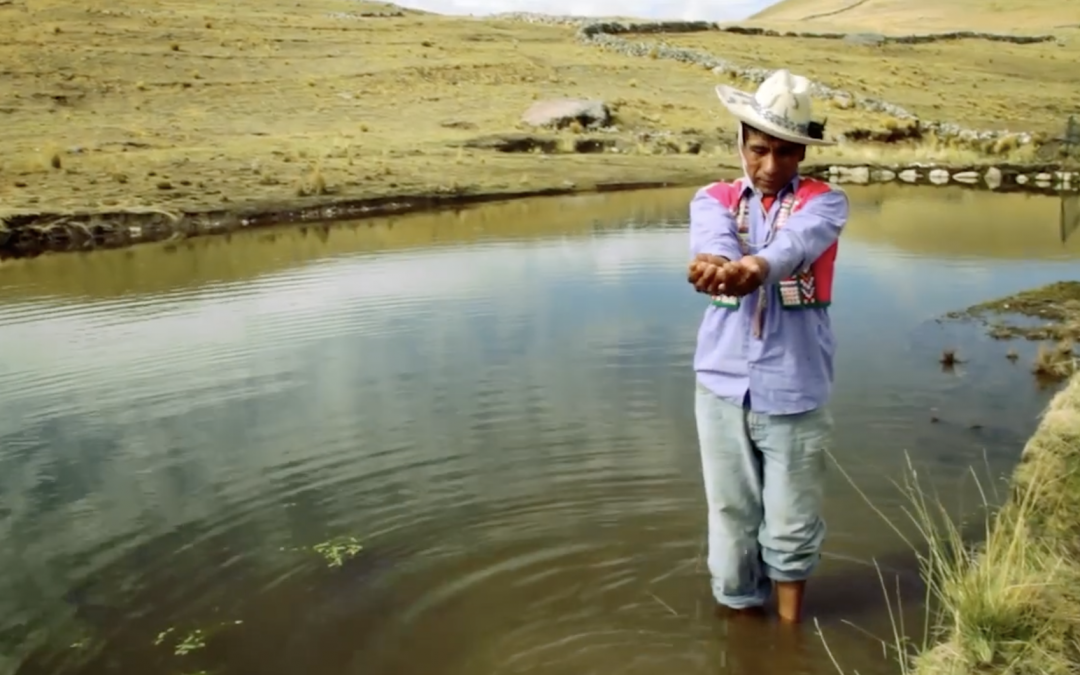
Description: Produced in collaboration with Peru’s Climate Change Adaptation Programme (PACC) and the Social Development Cooperation Fund (FONCODES), this educational video explores the ancient technology of water harvesting and storage using qochas, which are small reservoirs built with compacted earth dams. It features testimonials from residents of Ocongate and Kunturkanki who have adopted this sustainable water management technique. The video explains how qochas allow rainwater to be stored and filtered, which benefits agriculture, livestock and the recovery of local ecosystems.
Teaching ideas: Before watching, students can discuss what they know about water scarcity in the Andes and what solutions (ancient or modern) they might imagine, using vocabulary about agriculture, climate, and nature. The video’s structure across different time frames makes it useful for students to try to identify how speakers shift between the past (community experiences with water scarcity), the present (explanations of how qochas function), and the future (projections about sustainability), and discuss how each tense shapes the message. A closer listening activity can focus on the affective dimension of the testimonials: students identify the use of diminutives such as qochita and other expressions that convey emotional attachment to water and land, reflecting on how language encodes relationships with the environment. Finally, students can collaboratively build a short glossary of Quechua terms related to water management featured in the video, using this as an opportunity to discuss linguistic and biocultural diversity, indigenous ecological knowledge, and the role of language in climate adaptation.